Movie Review: The Hunger Games (2012)
Introduction
Directed by Gary Ross and based on Suzanne Collins’s best-selling 2008 novel, The Hunger Games (2012) launched one of the most culturally defining young-adult film franchises of the 21st century. Set in the dystopian nation of Panem, the film balances blockbuster action with sharp social satire, exploring themes of authoritarian control, media sensationalism, and desperate survival.
Plot
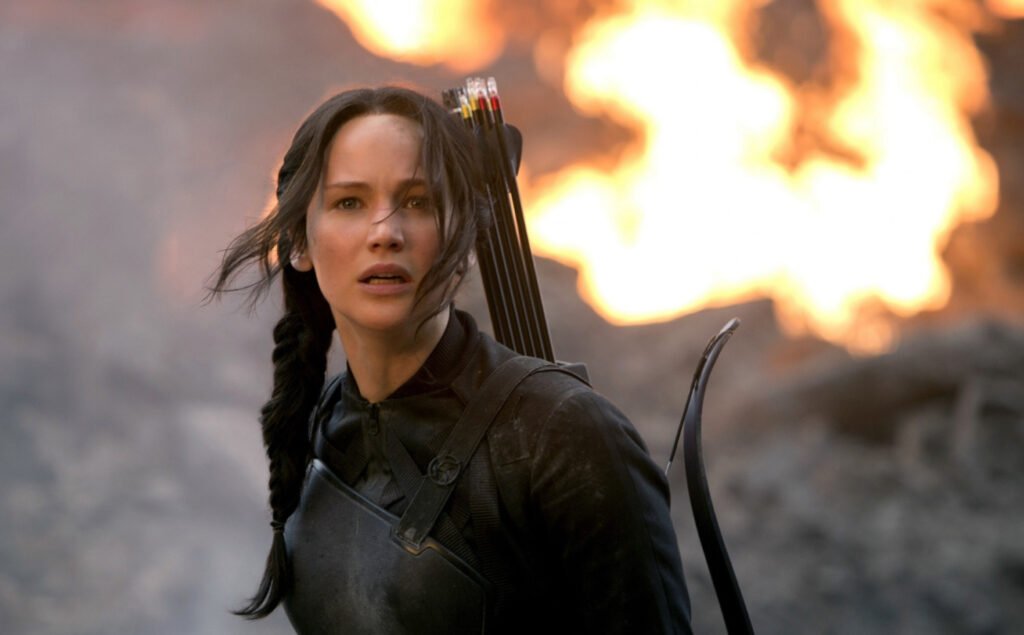
In a dystopian future, Panem is divided into twelve impoverished districts controlled by the opulent Capitol. As punishment for a past rebellion, each district must annually select two teenage “tributes”—one boy and one girl—via a lottery to fight to the death in a televised arena match known as the Hunger Games. When her younger sister Primrose is chosen, sixteen-year-old Katniss Everdeen (Jennifer Lawrence) volunteers to take her place. Alongside fellow District 12 tribute Peeta Mellark (Josh Hutcherson), Katniss travels to the Capitol, navigating intense physical combat, political manipulation, and calculated media appearances to survive the lethal arena.
Characters and Performances
Jennifer Lawrence gives a star-making lead performance as Katniss Everdeen, anchoring the film with quiet strength, fierce independence, and emotional authenticity. Josh Hutcherson delivers a charming, vulnerable portrayal of Peeta Mellark, providing a stark warmth to Katniss’s guarded demeanor. The supporting cast shines brilliantly, particularly Woody Harrelson as the cynical, booze-addled mentor Haymitch Abernathy, Elizabeth Banks as the flamboyant Effie Trinket, and Stanley Tucci as the terrifyingly charismatic host Caesar Flickerman.
Direction and Cinematography
Gary Ross brings a grounded, documentary-style approach to the material, utilizing shaky handheld camera work during the District 12 and arena sequences to heighten urgency and realism. The visual contrast between the bleak, muted tones of District 12 and the garish, neon-drenched extravagance of the Capitol effectively highlights the story’s stark class divide.
Script and Dialogue
Co-written by Suzanne Collins, Gary Ross, and Billy Ray, the screenplay stays remarkably faithful to the source material while smartly expanding the narrative perspective beyond Katniss’s internal monologue—notably incorporating behind-the-scenes control-room scenes featuring Gamemaker Seneca Crane (Wes Bentley) and President Snow (Donald Sutherland). The dialogue balances raw emotional survival instincts with satirical media commentary.
Music and Soundtrack
James Newton Howard delivers a haunting, emotionally resonant score that avoids generic action beats in favor of folk-infused melodies, quiet acoustic themes, and unsettling silence. The inclusion of the iconic “Rue’s Lullaby” provides one of the film’s most poignant and memorable auditory moments.
Conclusion
The Hunger Games is a compelling, high-stakes dystopian thriller that manages to be both a thrilling survival epic and a thoughtful critique of spectacle culture. Anchored by Jennifer Lawrence’s phenomenal performance and a strong supporting cast, it remains a landmark adaptation in modern sci-fi cinema.
Rating
8.5/10