Movie Review: Toy Story 5 (2026)
Introduction
Directed by veteran Pixar animator Andrew Stanton (co-directed by Kenna Harris), Toy Story 5 marks the monumental fifth installment in Pixar’s flagship animated saga. Released in theaters worldwide in June 2026, the film arrived with immense anticipation, carrying the weight of a beloved 30-year legacy. The overall premise shifts the iconic franchise into the digital age: Woody, Buzz Lightyear, Jessie, and the crew face an existential crisis when their kid, Bonnie, becomes completely captivated by a new tablet device named Lilypad, forcing the toys to confront what it means to stay relevant in a tech-saturated world.
Plot
Set two years after the events of Toy Story 4, the narrative reunites Woody with Buzz and the gang as they navigate a new central conflict: competition against screen time. Bonnie’s attention has pivoted from classic tangible playthings to “Lilypad,” an interactive frog-themed smart tablet. As the traditional toys are increasingly shoved into the back of the closet, chaos erupts when a rogue shipment of 50 high-tech, commemorative Buzz Lightyear units arrive stuck in malfunctioned demo modes, threatening both order in the room and Bonnie’s safety. The toys must unite to save their playtime legacy and prevent a digital meltdown before Bonnie grows up completely detached from physical imagination.
Characters and Performances
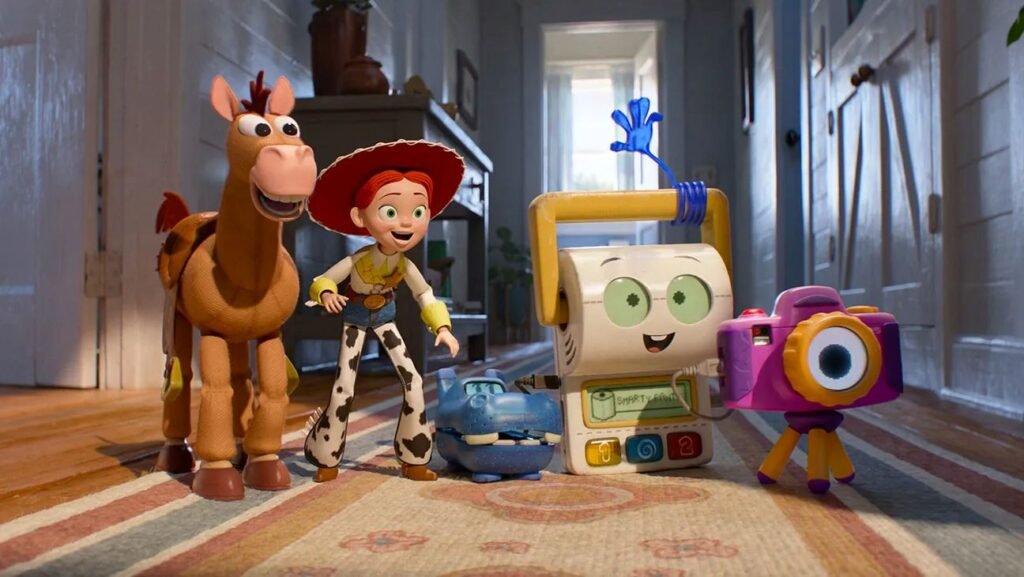
Tom Hanks and Tim Allen return with effortless chemistry as Woody and Buzz Lightyear, delivering performances rich with warmth and nostalgic familiarity. Joan Cusack’s Jessie steps into a central leadership role with infectious energy and emotional depth. Among the new additions, Greta Lee stands out as Lilypad, voicing the tablet with a charming yet subtly manipulative enthusiasm that mirrors modern app design. Conan O’Brien delivers sharp comedic relief as Smarty Pants, a neurotic educational toilet-training toy, while Scarlett Spears replaces previous voice actors to deliver an authentic, poignant portrayal of Bonnie.
Direction and Cinematography
Directors Andrew Stanton and Kenna Harris balance high-concept modern themes with classic visual heart. The cinematography, led by Matt Aspbury and Jean-Claude Kalache, pushes animated realism to new heights. Camera work cleverly contrasts the warm, dust-mote-filled nostalgia of physical toy environments with the sleek, high-contrast, blue-light glow emitted by digital devices. The visual composition during action sequences—particularly the chaotic swarm of 50 defective Buzz Lightyears—is staged with inventive scale and rhythm.
Script and Dialogue
Co-written by Andrew Stanton and Kenna Harris, the screenplay delivers a thoughtful, contemporary meditation on child development, technology, and generational shifts. Pacing remains tight across its 102-minute runtime, seamlessly interweaving physical comedy with genuine heart. The dialogue sparkles with witty tech satire while maintaining emotional resonance, culminating in memorable interactions regarding what truly makes a toy “real” in the eyes of a child.
Music and Soundtrack
Legendary composer Randy Newman returns to score the film, infusing the narrative with his signature brass, whimsical jazz, and acoustic warmth. His iconic motifs weave smoothly into new atmospheric tracks that incorporate subtle electronic accents to represent the encroaching digital world. The audio design excels in contrasting the soft, tactile sounds of plastic and fabric against the crisp, synthetic sound effects of modern gadgets.
Conclusion
Toy Story 5 is an insightful, poignant, and delightfully entertaining entry that successfully justifies its existence by tackling one of the most pressing cultural shifts in parenting today. It strikes a fine balance between sharp modern satire and classic emotional storytelling. Recommended for longtime fans of the series, families, and anyone who grew up cherishing physical toys.
Rating
8.5/10